
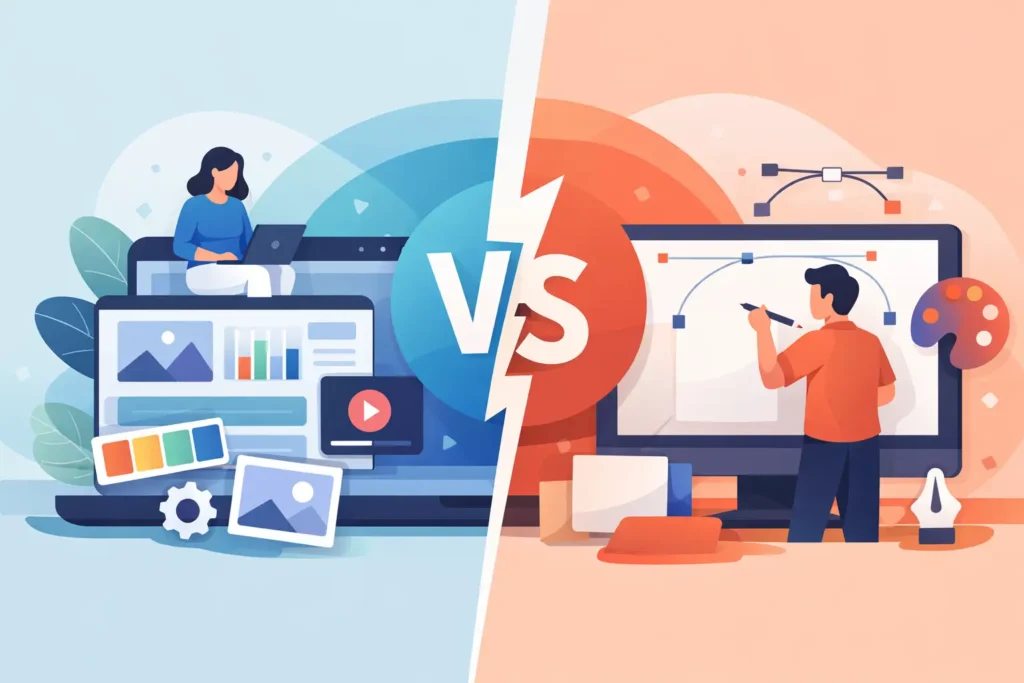
You do not need a full design team to start selling online. You need assets that look polished, fit your offer, and help you move fast. That is why the Canva templates vs custom design question matters so much for side hustlers, creators, and digital product sellers. The right choice can save you weeks of work, cut startup costs, and get your business in front of buyers faster.
If your goal is to build income online, this is not just a design decision. It is a business model decision. One path gives you speed and low overhead. The other gives you originality and tighter brand control. Both can work. The smarter move is knowing when each one actually makes sense.
Canva templates vs custom design for online business
For most beginners, Canva templates are the fastest route to launch. You open a ready-made file, swap colors, update text, drop in your logo, and publish. That means you can create social posts, lead magnets, mockups, e-book pages, product covers, webinar slides, and storefront graphics without staring at a blank screen for hours.
Custom design is different. It starts from zero or close to it. You either build the design yourself with more advanced skills or hire someone to create it for you. That usually means more time, more decisions, and more expense. In return, you get something designed specifically for your brand, audience, and offer.
So which one wins? It depends on what stage of business you are in and what you are trying to accomplish.
When Canva templates make the most sense
Templates are built for momentum. If you are launching a side hustle, testing product ideas, or trying to post more consistently, they remove one of the biggest bottlenecks in online business – design paralysis.
A good template gives you structure. The fonts already work together. The layout already feels balanced. The sizing is already correct for the platform. Instead of spending your energy figuring out where to place text or which elements look professional, you focus on your message and your offer.
That is a major advantage for beginner sellers. Most people do not fail because they lack ideas. They fail because every task takes too long. Canva templates shorten the path from idea to published product.
They also make sense financially. Hiring a designer for every Instagram carousel, lead magnet, ad creative, product mockup, and presentation deck can eat your budget fast. Templates let you create more content and more product assets without taking on that cost upfront.
This is even more valuable when you are working with digital products that can be edited, rebranded, and resold. If you buy monetization-friendly assets, you are not just saving time. You are buying leverage. You can customize the product, package it under your brand, and turn it into something you can sell.
Where custom design has the edge
Custom design starts winning when sameness becomes a problem.
If your business is growing and your brand needs to stand out in a crowded market, custom work can create a stronger visual identity. It gives you more control over layout, illustration style, typography, and the overall feel of your brand. That can matter a lot if you are targeting a premium audience or selling higher-ticket offers.
Custom design is also useful when your content or product has unique functional needs. Maybe you need a sales deck tailored to a specific offer. Maybe your product packaging needs a format templates do not handle well. Maybe your website visuals need to match a very specific brand experience. In those cases, templates can feel limiting.
There is also the originality factor. Popular templates can get reused often. If you barely customize them, your content may end up looking like everyone else in your niche. That does not always hurt performance, but it can weaken your brand over time.
Still, custom design is not automatically better. It is only better when the extra cost and effort produce a clear business return.
Speed vs uniqueness is the real trade-off
Most people frame Canva templates vs custom design as a quality debate. That is the wrong comparison. The real trade-off is speed versus uniqueness.
Templates help you execute now. Custom design helps you differentiate later.
If you are in the early stage of business, speed usually matters more. You need products live, content published, and systems moving. A perfect visual identity will not help much if you never launch. In that phase, done is often more profitable than original.
As your business matures, uniqueness becomes more valuable. Once you know what sells, who you serve, and how your brand should feel, investing in custom visuals can sharpen your positioning and increase perceived value.
That means the best answer is often not either-or. It is both, used at the right time.
How templates support profit faster
For an online entrepreneur, one of the strongest arguments for templates is simple: they compress production time.
Let us say you want to launch a mini digital shop. You need product covers, sales graphics, social promos, a lead magnet, and maybe a few slide decks or printable resources. Building every piece from scratch could delay your launch by weeks. Starting with templates can cut that timeline dramatically.
That speed matters because faster launches create faster feedback. You can test a niche, adjust your branding, improve your product listings, and start collecting sales data sooner. That is how smart creators build momentum.
Templates also reduce skill friction. You do not need to become a pro designer before you become a seller. You can start with polished assets now, improve your eye over time, and upgrade later when the business justifies it.
That is one reason digital product marketplaces that sell editable assets with resale rights appeal to so many beginners. They turn design into a shortcut to execution and, in some cases, into an income opportunity of its own.
When templates hurt more than they help
Templates can become a crutch if you never customize them properly.
If you keep the default fonts, generic wording, stock layouts, and placeholder style, your brand can look forgettable. Worse, it can look rushed. Buyers can spot lazy branding quickly, especially in digital product markets where visual trust matters.
Templates also fail when people use them for the wrong job. A simple Instagram post template is great for content. It is not always enough for a premium brand launch or a highly strategic ad campaign. The more complex the goal, the more likely you need deeper design thinking.
That is why customization matters. Change the messaging. Adjust the colors to fit your brand. Swap imagery. Edit sections so the design supports the offer instead of just decorating it. A template should be a starting point, not a copy-and-paste shortcut with no strategy behind it.
A smart middle ground for growing brands
The strongest approach for many online sellers is hybrid.
Use Canva templates for recurring assets that need speed and consistency. This includes social content, lead magnets, product sheets, presentation slides, checklists, and launch graphics. Then invest in custom design for the pieces that shape brand perception most, like your logo system, core brand visuals, website hero graphics, or flagship product packaging.
This approach protects your time and your budget while still giving your business room to stand out.
It also gives you a cleaner growth path. You do not need to spend heavily at the start. You can launch with templates, make sales, learn what your audience responds to, and then reinvest into custom design where it will have the biggest payoff.
That is a much stronger move than pouring money into polished branding before you have validated your offer.
So which should you choose?
If you are a beginner, a side hustler, or someone building digital income streams with limited time, Canva templates are usually the better first move. They help you start faster, spend less, and create assets you can actually use right away.
If you already have traction, a defined audience, and a brand you want to elevate, custom design can help you look more established and less replaceable.
And if you want the most practical answer, start with templates and customize them well. Then upgrade to custom design as your business grows.
That is not settling. That is building strategically.
A business does not need to look expensive on day one. It needs to get into the market, attract attention, and make money. Once it does that, you can refine the polish. If you are serious about building income online, choose the design path that gets you moving now and positions you to grow stronger later. Ready to thrive online? Start with what helps you launch, sell, and keep going.