
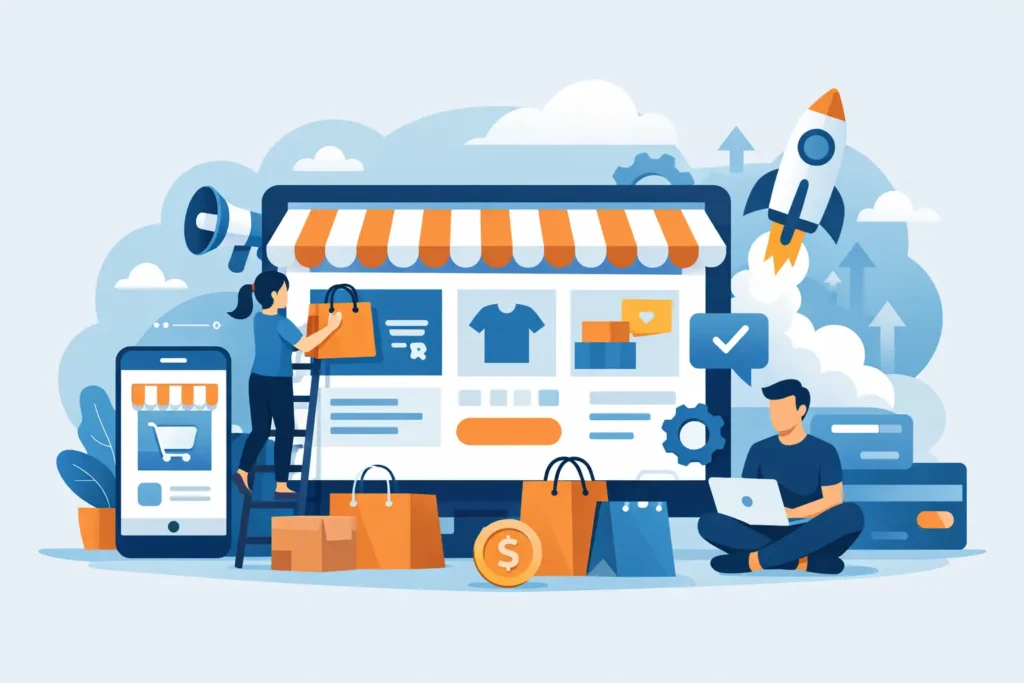
Most people do not fail at selling online because their idea is bad. They fail because they spend weeks trying to piece together a logo, product files, sales graphics, mockups, checkout pages, and marketing content before they ever make their first dollar. A digital storefront starter kit changes that. It gives you a faster path from idea to offer, which matters when your real goal is not to keep planning – it is to start selling.
If you want an online business that can grow without inventory, shipping, or a huge startup budget, this kind of kit can remove a lot of friction. Instead of building every part of your storefront from zero, you start with ready-made assets that help you package, present, and promote digital products quickly. For beginners, that speed is often the difference between staying stuck and getting live.
What a digital storefront starter kit actually does
A digital storefront starter kit is not just a folder of random templates. At its best, it is a shortcut to execution. It gives you the visual and promotional pieces you need to create a store that looks polished enough to earn trust and simple enough to launch now, not someday.
That might include product mockups, sales page graphics, social media promos, templates for your product covers, brand visuals, and storefront assets designed to help your offers look more valuable. Some kits also include editable content, faceless marketing materials, and resale-friendly products that can become part of your own product catalog.
That last part matters. If your kit includes PLR or MRR rights on certain assets, you are not only buying design support. You may also be buying inventory in digital form. That creates a different kind of opportunity because the purchase can help you build your brand and give you something to sell.
Why starter kits work so well for beginner sellers
When you are new, the biggest problem usually is not ambition. It is overload. You know you want online income, but you are hit with too many moving parts at once. What should you sell? How should it look? What do you post to promote it? What if your store looks amateur?
A good digital storefront starter kit answers those questions with assets you can actually use. That reduces decision fatigue and cuts down the time between buying and launching. If you are a side hustler, a freelancer, a stay-at-home parent, or a creator trying to monetize without hiring a designer, that speed has real value.
It also helps you avoid a common mistake – spending all your energy on setup and none on selling. A storefront does not make money because it exists. It makes money when people see clear offers, trust what they are buying, and understand the result. Starter kits help you get to that point faster.
The pieces that matter most in a digital storefront starter kit
Not every kit is worth your money. Some look exciting on the sales page but leave you doing half the work yourself. The best ones focus on assets that directly support visibility, conversion, and product positioning.
Product presentation is first. If your digital item looks flat or unfinished, buyers hesitate. Mockups, product covers, listing graphics, and clean promotional visuals make even a simple template or guide feel more premium.
Sales support comes next. This includes page sections, ad creatives, social post templates, email graphics, or launch materials that help you promote your offer instead of staring at a blank screen. If you are trying to generate traffic from Instagram, Pinterest, short-form video, or email, these pieces save hours.
Then there is monetization flexibility. If a starter kit includes assets you can edit, rebrand, bundle, or resell depending on the license, it becomes more than a design pack. It becomes a business-building resource. That is a major advantage for sellers who want speed and ownership at the same time.
Who should buy a digital storefront starter kit
This kind of product makes the most sense for people who value action over custom perfection. If you are building your first digital business, testing a niche, or trying to create a second income stream without hiring a team, a starter kit can be a smart move.
It is especially useful for creators who have ideas but not design skills, and for beginners who know they want to sell digital products but do not know what assets they need to look credible. It also fits people who want to launch multiple low-ticket offers fast, because repeatable templates make scaling easier.
That said, it is not magic. If you already have a strong brand, a custom funnel, and a full content system, a starter kit may feel too basic unless it includes resale rights or niche-specific materials. It depends on your stage. For a beginner, it can compress months of setup. For an advanced seller, the main value may be speed, extra inventory, or new promotional assets.
How to get real value from your starter kit
The biggest mistake is downloading everything and doing nothing with it. A digital storefront starter kit only pays off when you use it to launch a focused offer.
Start with one audience and one problem. Do not try to build a giant storefront with twenty unrelated products on day one. Pick something simple – content templates, planners, ad creatives, faceless video resources, presentation slides, or social media packs. Then use the kit to package that offer in a way that looks clean, useful, and easy to buy.
Next, customize enough to make it yours. You do not need to redesign every file. Change the colors, add your brand name, tighten the messaging, and make sure the promise is clear. Buyers do not need fancy. They need confidence that your product solves something.
After that, focus on visibility. Use the promotional assets inside the kit to post consistently, build curiosity, and drive people to your storefront. You are not trying to win a design award. You are trying to make sales and gather proof that your market wants what you are offering.
What to watch out for before you buy
Speed is great, but shortcuts still need standards. Before you buy any starter kit, check whether the files are actually editable, whether the design style fits your market, and whether the license is clear. If resale rights are part of the offer, you need to know exactly what you can and cannot do.
You should also be realistic about quality. A huge bundle is not automatically better than a smaller, more usable package. If half the assets are outdated or off-brand for your audience, they will slow you down instead of helping you launch.
It is also worth thinking about business model fit. If your goal is to build a digital product shop quickly, a storefront kit makes sense. If your goal is to sell high-ticket consulting, it may only help with visuals, not with offer strategy. The right tool depends on what you are trying to monetize.
Why this is more than a design purchase
For a lot of new entrepreneurs, a digital storefront starter kit is really about confidence. It helps you stop asking, What should I make from scratch? and start asking, How fast can I get this in front of buyers?
That shift matters because online income usually grows through repetition. You launch. You learn. You improve. You add new offers. You build a customer base. Ready-made storefront assets help you enter that cycle faster, and that means you can reach revenue faster too.
For brands built around digital products, templates, and resellable resources, that is where the real edge shows up. A strong kit does not just save time. It helps create momentum. And momentum is what turns a side hustle into something bigger.
If you want a faster start, look for a package that combines storefront visuals, promotional assets, and monetization-friendly licensing. That mix gives you more than convenience. It gives you leverage. Platforms like How To Make Money Online Store tap into that demand by packaging ready-to-use digital business resources for people who want to stop overthinking and start building.
Your first storefront does not need to be perfect. It needs to be live, clear, and ready to sell. Start there, improve as you go, and let speed work in your favor.