
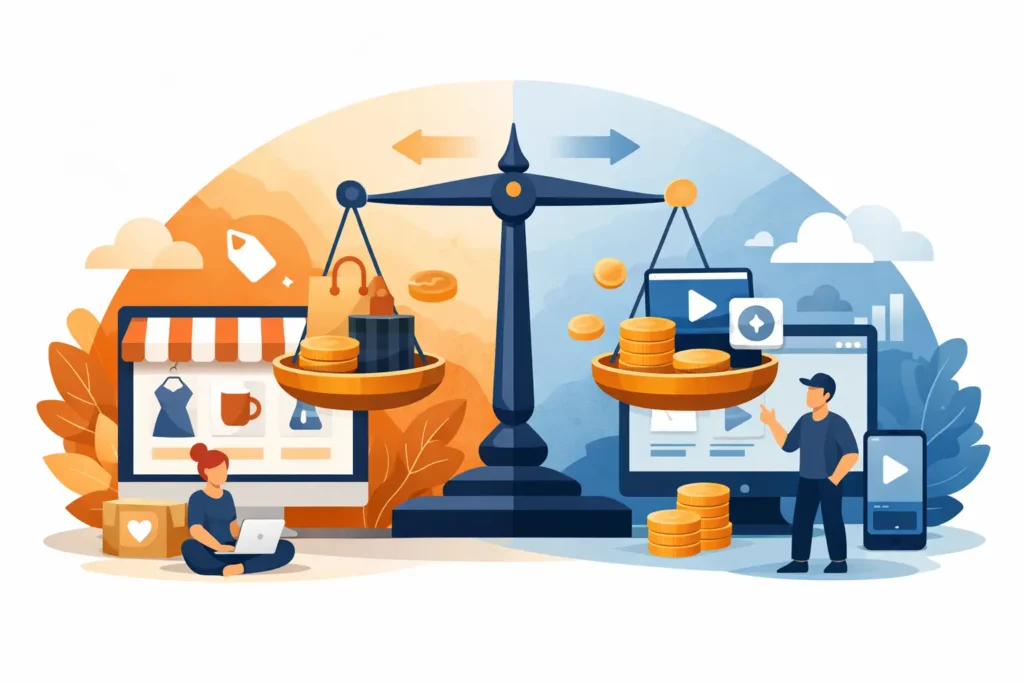
Selling a digital product is easy. Selling it in the right place is where the money starts to change.
That is why the Etsy vs Stan Store question matters so much for beginners, creators, and side hustlers. Both platforms can help you sell online, but they work in completely different ways. One gives you access to a marketplace full of buyers. The other gives you a simple storefront built around your audience, your brand, and your offers.
If you want fast traction, passive income potential, and a platform that matches how you actually plan to sell, you need to look past the hype. The best choice depends on what you sell, how you get traffic, and how much control you want over the customer journey.
Etsy vs Stan Store: The core difference
Etsy is a marketplace. Stan Store is a storefront.
That one difference shapes almost everything else.
On Etsy, buyers are already on the platform searching for products. That means you can benefit from built-in traffic, especially if you sell something people already know how to look for, like printable planners, social media templates, invitations, wall art, or business forms. You list your item, optimize it for search, and compete with other sellers inside Etsy’s ecosystem.
Stan Store works differently. It is not a marketplace where people browse thousands of competing listings. It is your own sales page, usually connected to your Instagram, TikTok, YouTube, or other creator channels. Instead of waiting for platform search traffic, you drive people directly to your store and sell through your own content.
If Etsy is closer to renting shelf space in a busy mall, Stan Store is closer to opening a clean, focused digital shop that you control.
Who Etsy makes sense for
Etsy can be a smart move if you are just starting and do not yet have an audience. That is the biggest reason many beginners choose it first.
You can tap into existing buyer demand without building a website from scratch or learning paid ads on day one. If your digital product solves a clear, searchable need, Etsy gives you a chance to get discovered. That matters when you are trying to make your first sales and validate what people actually want.
It is especially strong for products with obvious search intent. Think wedding templates, baby shower games, resumes, business cards, checklists, planners, budgeting tools, or editable Canva designs. Buyers come to Etsy ready to purchase, not just browse content.
The downside is competition. A lot of it. If your niche is crowded, you are not only competing on quality. You are competing on price, thumbnails, reviews, keyword optimization, and speed of trust-building. New shops can feel buried early on.
There is also less control over branding. Your store exists inside Etsy’s layout, rules, and customer experience. That can be fine when you want simplicity, but it becomes limiting when you want to build a real brand instead of just a listing catalog.
Who Stan Store makes sense for
Stan Store is built for creators, educators, and digital sellers who want a direct path from attention to purchase.
If you are posting on social media, growing an email list, sharing short-form videos, or building a personal brand, Stan Store can feel much more natural than Etsy. It keeps the buying experience simple. Someone clicks your link, sees your offer, and buys without getting distracted by competitor products on the same page.
That is a big advantage when you sell higher-value digital products, mini courses, bundles, coaching, or monetization-focused resources. It is also strong if your offer needs explanation. On Etsy, many buyers want a quick search-and-buy experience. On Stan Store, you can position the transformation, not just the file.
This matters even more for sellers offering digital assets that help people make money, save time, or build a business. Products with PLR or MRR rights, content packs, faceless marketing kits, templates, and business-in-a-box style bundles often convert better when you can explain the opportunity clearly.
The challenge is traffic. Stan Store does not hand you marketplace discovery. If nobody is clicking your link, nobody is buying. So it works best when you already have some audience, or at least a real plan to create content consistently.
Fees, margins, and what you actually keep
This is where many sellers start paying attention.
Etsy charges listing fees, transaction fees, payment processing fees, and sometimes offsite ad fees if your products are promoted through Etsy’s marketing system. Those costs can add up, especially on low-ticket digital products. If you sell a $5 or $7 item, your margin matters.
Stan Store usually runs on a monthly subscription model plus payment processing. That means your cost structure is different. Instead of paying listing fees for every product, you are paying for access to the storefront platform itself.
Which one is cheaper depends on volume.
If you are testing a few low-cost products and want minimum upfront commitment, Etsy may feel easier to justify. If you plan to sell repeatedly, bundle offers, or push mid-ticket products through content, Stan Store can become more attractive because you are building around your own customer flow instead of paying into a marketplace every time.
For entrepreneurs thinking long term, profit is not just about fees. It is also about average order value. Stan Store often gives you more flexibility to package offers, add upsells, and present higher-value bundles. That can raise revenue faster than simply chasing more small transactions.
Traffic: borrowed attention vs owned momentum
This is the real trade-off in Etsy vs Stan Store.
Etsy gives you borrowed attention. People are already there. That can speed up your first sale, but you are still operating inside a platform you do not control. A ranking shift, a policy update, or more competition can change your results fast.
Stan Store pushes you toward owned momentum. You create the traffic through your content, audience, and marketing. That takes more effort upfront, but it also gives you more stability if you keep building your brand.
For people serious about online income, this matters. A marketplace can help you start. A direct audience can help you scale.
That is why many smart sellers eventually stop treating this like an either-or decision. They use Etsy to capture search traffic and validate product demand, then use Stan Store or a similar storefront to build a stronger brand and sell more profitable offers.
Branding and customer control
If your goal is just to make occasional digital sales, Etsy may be enough.
If your goal is to build an actual online business, Stan Store has a clear edge in control. You decide how your offers are positioned. You shape the sales journey. You can make your store feel aligned with your content, niche, and message.
That matters when your business is based on trust and transformation, not just product thumbnails.
A creator selling a faceless content bundle, webinar template pack, or resellable digital product collection needs room to explain the value. They may want to position the product as a shortcut to income, a time-saver, or a launch-ready business asset. That message is easier to deliver in a direct storefront than in a crowded marketplace listing.
Branding also affects repeat buyers. On Etsy, many customers remember the platform before they remember the seller. On Stan Store, your brand stays front and center.
Ease of setup for beginners
Both platforms are beginner-friendly, but in different ways.
Etsy is easier if you want a familiar listing-based model. Upload your files, add mockups, write titles and descriptions, and publish. The learning curve is mostly about Etsy SEO, pricing, and standing out visually.
Stan Store is easier if you already think like a creator. If you are comfortable making content, putting a link in bio, and speaking directly to your audience, it can feel simpler because the sales process is more direct. You are not learning marketplace optimization as much as learning how to connect content to offers.
Neither platform magically fixes weak products. If the offer is unclear, generic, or poorly positioned, both will underperform.
That is why ready-made, high-demand digital assets can give beginners an advantage. Instead of spending weeks designing from scratch, you can focus on packaging, positioning, and selling. That speed matters when your goal is income, not endless preparation.
So which one should you choose?
Choose Etsy if you want access to built-in buyer traffic, you sell highly searchable digital products, and you need a lower-barrier way to test what sells.
Choose Stan Store if you are building an audience, want more brand control, and plan to sell bundles, creator resources, or higher-value digital offers through content.
Choose both if you want the strongest mix of discovery and control.
That is often the smartest play. Let Etsy help you get found. Let Stan Store help you build a business people remember.
For many side hustlers, the fastest path is not picking the “perfect” platform. It is picking the one that matches how you sell right now, then expanding once momentum shows up. If you are creating content and selling done-for-you digital assets, templates, or resellable products, a direct storefront can create more upside over time. If you need traffic first, Etsy can help you get moving.
The best platform is the one that gets your first offer live, your first customer in the door, and your business out of planning mode. Start there. Then build bigger.