
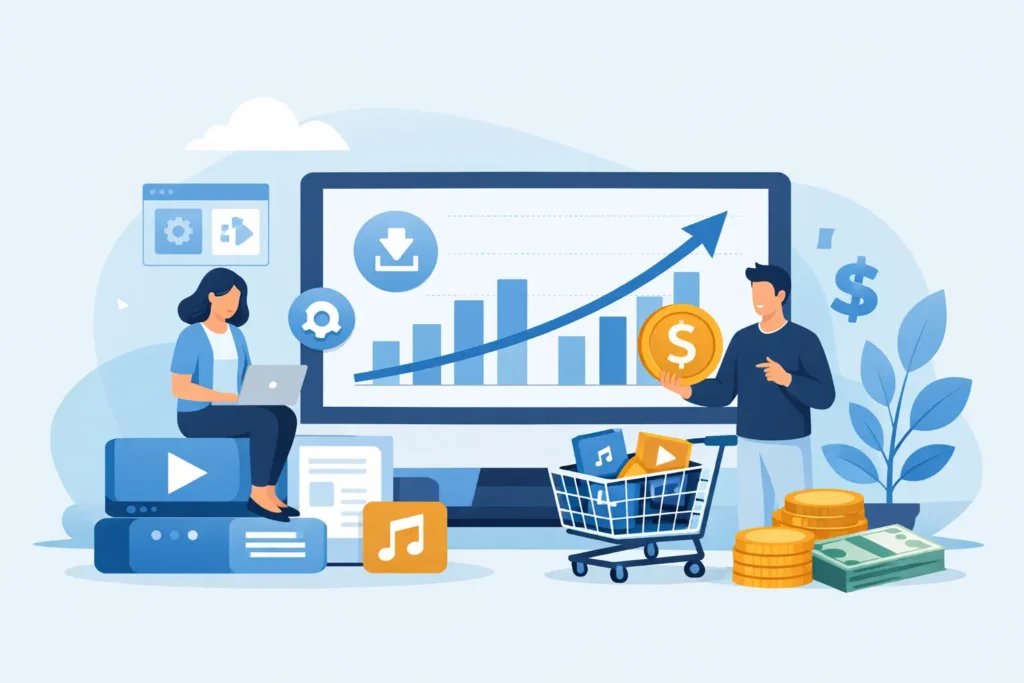
One product, one checkout page, and one sale while you sleep – that is the part everyone talks about. What gets less attention is the real question behind the hype: is selling digital products profitable when you factor in time, competition, and the work it takes to get buyers? For most beginners, the honest answer is yes, it can be very profitable, but only when the product solves a clear problem and the seller knows how to position it.
That is exactly why digital products keep pulling in side hustlers, creators, and first-time online entrepreneurs. The startup costs are low, delivery is instant, and there is no inventory sitting in your garage. If you want a business model that can start small and scale without shipping boxes, digital products are one of the strongest options available.
Is selling digital products profitable for beginners?
Yes, and in many cases, more profitable than physical products. A digital product can be created once and sold again and again, which means the margin on each additional sale is usually high. You are not paying for packaging, storage, or shipping every time someone buys.
That does not mean every digital product becomes a money machine. Profit depends on what you sell, who it is for, and how fast you can get it in front of the right audience. A generic file with no clear use case will struggle. A ready-to-use solution that saves time, makes money, or improves results has a much better chance.
For beginners, the biggest advantage is speed. You do not need to manufacture anything. You can start with templates, workbooks, swipe files, mockups, planners, mini courses, social media packs, ad creative bundles, or resale-ready assets. If the product is useful and positioned well, the path to your first sale can be much shorter than in many other business models.
Why the margins can be so strong
The biggest reason selling digital products is profitable is simple: your cost per extra sale is close to zero. Once the file exists, one customer can buy it or one thousand can buy it without changing your delivery process much.
That creates a different kind of business math. Let us say you spend time creating a Canva template bundle or buy a product with resale rights and rebrand it for your niche. Your upfront investment might be your time, a design tool subscription, a storefront fee, and maybe some content creation to promote it. After that, each sale keeps more of the revenue in your pocket.
This is where digital products beat many service businesses too. With client work, you trade hours for income. With digital products, you build an asset. It may take effort upfront, but the asset can keep producing long after the original work is done.
There is also room to stack your profit. One product can lead to bundles, upsells, low-ticket offers, email list growth, and repeat customers. A buyer who purchases a social media template pack today may come back for a faceless marketing bundle, mockups, or a course presentation kit next week. That kind of product ecosystem can increase revenue without constantly chasing brand-new buyers.
What makes digital products profitable or not
Profit does not come from the file alone. It comes from the fit between the file and the market.
The most profitable digital products usually do one of three things. They save time, help someone make money, or make a task easier. That is why templates, business tools, content packs, and editable assets perform so well. People are not buying pixels on a screen. They are buying speed, convenience, and momentum.
Pricing matters too. Low-ticket products can sell quickly because they feel easy to try, but you need enough volume to make that model worthwhile. Mid-ticket bundles often create stronger profit because they increase average order value without requiring custom fulfillment. The sweet spot depends on your audience, but in general, bundled value tends to convert better than a single thin offer.
Marketing is the other half of the equation. A great product with no traffic is not profitable. A decent product with smart positioning often beats a better product that no one sees. This is where short-form content, email capture, storefront optimization, and strong product visuals matter. If people instantly understand what the product does and why it saves them time, your sales process gets much easier.
The hidden costs people ignore
A lot of creators say digital products are pure profit. That is not realistic.
There are still costs, just different ones. You may pay for design platforms, email software, sales platforms, payment processing, ad spend, mockups, or content tools. Even if your cash costs are low, your time is still an investment. If it takes three weeks to create something nobody wants, that product was expensive.
There is also the cost of poor positioning. A product can be useful and still fail because the title is weak, the niche is too broad, or the buyer cannot tell what result they are getting. Many sellers blame the market when the real issue is that the offer is vague.
Another factor is saturation. Yes, digital products are popular. But saturation only hurts generic sellers. Buyers still spend money when the product is specific, relevant, and packaged around a clear transformation. A plain planner may struggle. A content planner for faceless YouTube creators trying to post faster is much easier to sell because the use case is obvious.
Is selling digital products profitable with PLR and MRR?
It can be, and for many beginners, it is one of the fastest ways to enter the market.
PLR and MRR products lower the barrier to entry because you do not have to build everything from zero. You can start with an existing asset, rebrand it, improve the design, adjust the messaging, package it for a niche, and launch faster. That means less creation time and quicker monetization.
This model works best when you do more than repost a file and hope for the best. The money is in customization and positioning. If you take a general template bundle and tailor it for realtors, coaches, beauty brands, or ecommerce stores, you instantly create more perceived value. You are not just reselling a product. You are turning it into a business-ready solution.
That is one reason marketplaces built around monetization-friendly digital assets have gained attention. They shorten the time between idea and launch. For a beginner who wants to build an online income stream without designing every element alone, that shortcut can be the difference between taking action and staying stuck.
How long does it take to become profitable?
That depends on your traffic, offer quality, and consistency. Some sellers make sales within days. Others take months because they launch without an audience or keep changing direction.
If you already have content channels, an email list, or a niche audience, profitability can happen faster. If you are starting from zero, expect to spend time building attention before sales become steady. The good news is that digital products do not require massive overhead to stay alive while you test.
The fastest path is usually not creating ten random products. It is launching one offer, validating demand, improving the product page, collecting buyer feedback, and then expanding into related offers. Momentum compounds when your storefront feels connected instead of scattered.
The sellers who usually win
The most profitable sellers are not always the most talented designers. They are the ones who understand buyers.
They know what problem they solve. They make the outcome obvious. They create visuals that help customers picture using the product immediately. And they keep the buying process simple.
They also think in terms of systems. One product becomes content. Content builds an email list. The email list drives repeat sales. Repeat sales fund more product creation. That is how a small digital shop turns into a real income stream.
If you are serious about making this work, focus less on making everything perfect and more on making something useful, marketable, and easy to buy. A clean storefront, a practical offer, and a clear niche can take you much further than endless planning.
So, is selling digital products profitable? Yes – very profitable for the right seller with the right offer. Not because the internet makes money easy, but because digital products let you build once, sell many times, and grow without the usual limits of inventory or hourly work. If you want ownership, flexibility, and a business model you can start building now, this space is still full of opportunity. Start with a product people already want, package it like it solves a real problem, and give yourself enough time to let the momentum build.