
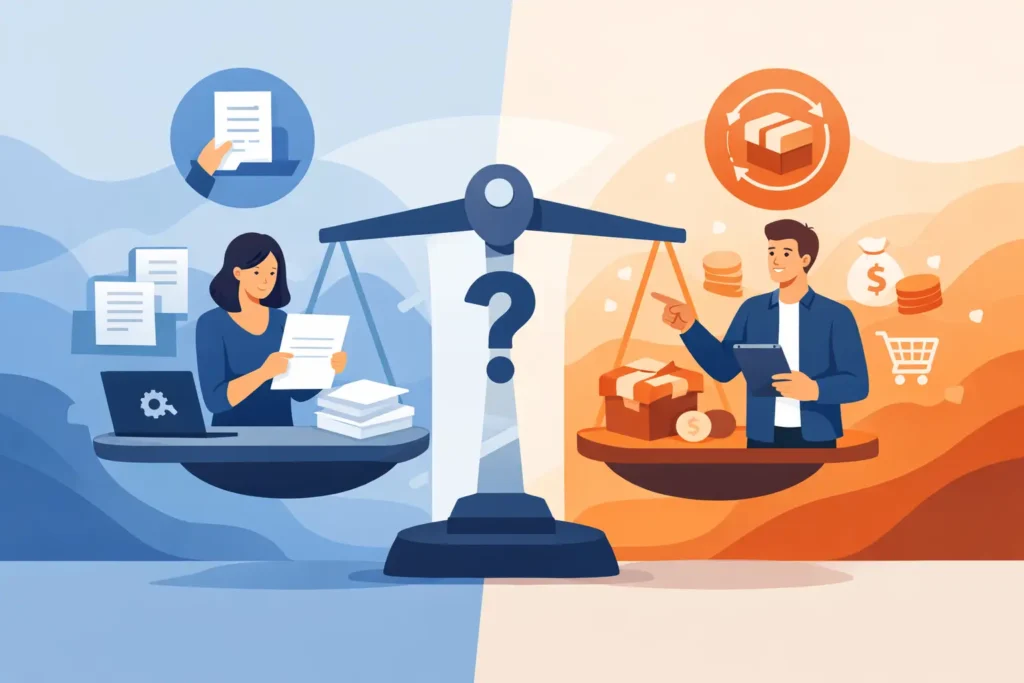
You do not need another digital product idea sitting in a notes app. You need something you can actually sell. That is why understanding PLR or MRR licensing matters so much if your goal is to start earning online without spending weeks creating everything from scratch.
For beginners, these two license types can look almost identical. You buy a digital product, you get rights to use it, and you hope to turn it into income. But the details change everything. The license you choose affects how much you can customize, how you position your brand, and how competitive your offer will be once it goes live.
What PLR or MRR licensing actually means
PLR stands for Private Label Rights. MRR stands for Master Resell Rights. Both are designed to let you profit from digital products you did not create yourself, but they do it in different ways.
With PLR, you can usually edit, rebrand, and modify the product before selling it. That gives you more control. You can change the title, rewrite sections, add your logo, update the design, combine it with other resources, and package it as part of your own offer. In many cases, that makes PLR the better choice if you want to build a real brand instead of just flipping files.
With MRR, you can usually resell the product as-is. The focus is speed. You get the product, list it for sale, and keep the profits based on the license terms. That simplicity is appealing when you want a quick start, but it also comes with a trade-off. If many other sellers have access to the same product and cannot meaningfully change it, your offer can become easier to compare and harder to stand out.
That is the first big decision in PLR or MRR licensing. Do you want more flexibility, or do you want faster execution?
PLR licensing makes sense when brand matters
If your plan is to grow a store, audience, or content-based business, PLR often gives you more room to win. You are not just selling a file. You are shaping an offer that feels like your own.
Let’s say you buy a PLR Canva template pack. Instead of uploading it exactly as received, you can redesign the cover, rename the bundle, improve the colors, add extra pages, and target a specific customer. A generic planner can become a “busy mom content planner” or a “faceless brand launch kit” depending on who you want to reach.
That positioning matters because buyers rarely pay more for generic. They pay for relevance. PLR lets you take a product with broad utility and turn it into something that feels tailored, focused, and more valuable.
There is work involved, of course. PLR is not magic money. If you want better results, you need to improve what you buy. Clean up the design. Tighten the copy. Make the product easier to use. Add bonuses if they strengthen the offer. The upside is that the time you invest can create a more defensible product and a stronger long-term business.
MRR licensing makes sense when speed matters most
MRR is attractive for a different reason. It removes friction.
If you are new to digital products and want to start selling quickly, MRR can be the easier entry point. You do not need advanced design skills. You do not need to write a full product from zero. You can focus on getting your storefront live, learning how to attract traffic, and testing what buyers actually respond to.
This is useful for side hustlers who are short on time. Maybe you are working a full-time job, raising kids, or trying to build an extra income stream in the evenings. MRR can help you skip the long production phase and move straight into selling.
But there is a catch. Speed can create sameness. If ten people are selling the exact same file with nearly identical graphics and descriptions, the market gets crowded fast. In that case, the winners are usually the people with better marketing, stronger audience trust, better bundling, or a more compelling storefront.
So MRR is not worse than PLR. It is just a different play. It works best when your advantage is distribution, not product customization.
PLR or MRR licensing for beginners
If you are just getting started, the best option depends on what kind of beginner you are.
If you feel confident using tools like Canva, editing PDFs, writing simple sales copy, or packaging offers, PLR is often the smarter move. You can create something that looks more original without needing to build from scratch. That can help you avoid competing on price alone.
If you feel overwhelmed by content creation and mainly want something simple you can list and sell right away, MRR may be the better first step. It gets you into the game faster. You learn how digital selling works, how customers buy, and how to promote an offer before you worry about creating a custom brand experience.
A lot of successful sellers actually use both. They might use MRR products to generate quick cash flow while also developing PLR products into stronger branded offers. That hybrid approach can make sense if you want speed now and differentiation later.
The real question is not just rights. It is business model.
Most people compare PLR and MRR as license categories, but the smarter comparison is how each one fits your business model.
If you want to build a faceless content brand, sell themed bundles, grow an email list, or turn digital products into a more serious online business, PLR gives you more options. You can create lead magnets, tripwires, upsells, and niche bundles that feel intentional instead of copied.
If you want a low-friction product to test demand, build your storefront quickly, or start learning digital sales with minimal setup, MRR can be a strong fit. It is especially useful when your focus is quick implementation and consistent promotion.
This is why license terms should never be treated like a small detail. The license shapes the way you can market, package, and scale the asset.
What to check before you buy
Not every PLR or MRR licensing offer gives you the same rights. That is where people make expensive mistakes.
Some PLR products allow full editing, but not resale on certain platforms. Some MRR products let you resell the item, but not pass along resale rights to your customers. Some licenses restrict use in bundles, paid memberships, or giveaways. Others allow broad use but require the product to remain unchanged.
Read the license before you buy, not after. If the terms are vague, that is a red flag. You should know whether you can modify the product, rebrand it, bundle it, use it as a bonus, or sell it as part of a larger offer. Clear terms protect your business and save you from building on the wrong foundation.
It also helps to look at market saturation. A good product with generous rights is not automatically a good business opportunity if thousands of sellers are pushing the exact same version. In that case, ask yourself whether you have a way to position it differently or market it better.
How to make either license more profitable
The sellers who earn the most with resale rights usually do one thing well. They stop thinking like buyers and start thinking like offer builders.
If you use PLR, improve the product until it feels specific and polished. Add a better name. Tighten the design. Create a clearer promise. Stack related resources together so the bundle solves a more complete problem.
If you use MRR, improve the presentation around the product. Your sales page, product image, niche targeting, audience messaging, and follow-up strategy can do a lot of heavy lifting even when the core file stays the same.
In both cases, the product alone is rarely the whole business. Your store experience, positioning, and consistency are what turn a download into revenue. That is why marketplaces like How To Make Money Online Store resonate with so many beginner entrepreneurs. People are not just buying files. They are buying a faster path to execution.
Which one should you choose?
Choose PLR if you want more control, stronger branding, and a product you can shape into something more unique. Choose MRR if you want a faster launch, simpler setup, and a straightforward resell model.
If you are serious about building income online, do not choose based on hype. Choose based on how you plan to sell. A flexible license helps when you want to create a brand. A simpler license helps when you want to move fast. Both can work. Both can make money. The better option is the one that matches your skill level, your schedule, and the kind of business you want to own.
Start with the model you can actually execute this week. Momentum beats overthinking, and the right digital product with the right license can be the asset that gets your business moving.