
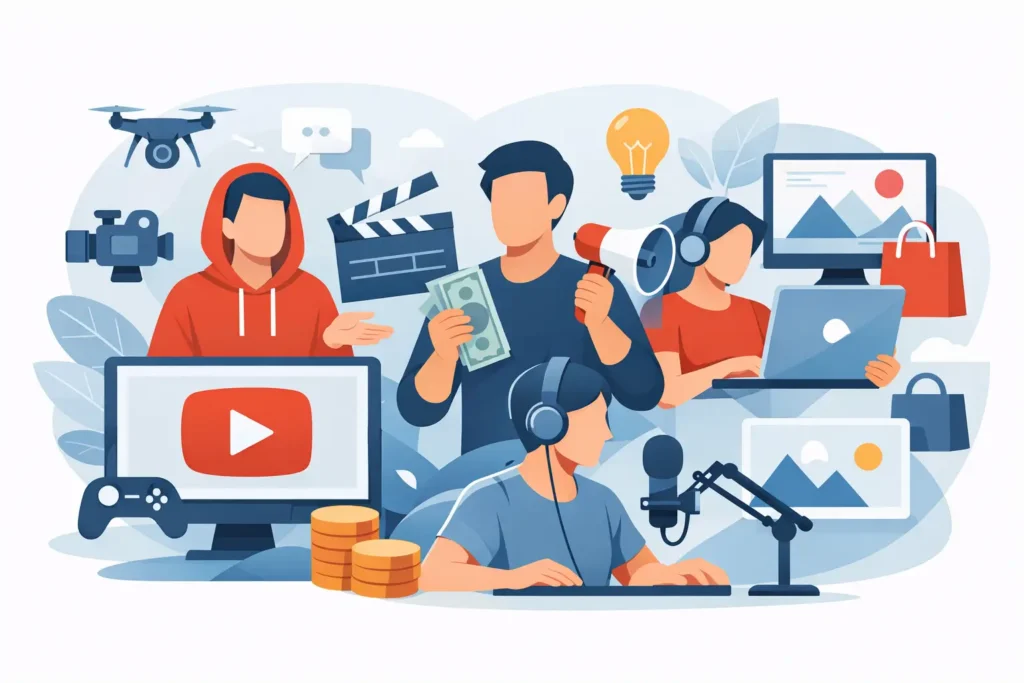
Most people do not fail on YouTube because they lack talent. They fail because they pick a channel idea that needs too much time, too much confidence on camera, or too many skills at once. That is why YouTube faceless content ideas are so powerful for beginners and side hustlers. They lower the barrier to entry, speed up production, and make it easier to stay consistent long enough to build views, leads, and income.
If your goal is to create content that can eventually sell digital products, attract buyers, or support an online brand, faceless content gives you room to move fast. You are not waiting for perfect lighting, a full studio setup, or the confidence to become a personality brand. You are building an asset. And the right format can do real work for your business while you stay behind the scenes.
Why YouTube faceless content ideas work so well
Faceless channels are attractive for one simple reason: they are easier to systemize. That matters if you want content to become a real revenue stream instead of a hobby you abandon in three weeks.
When your face is not the centerpiece, you can batch scripts, outsource editing, reuse templates, and test more topics without rebuilding your whole brand every time. This is especially useful for creators who want to sell templates, guides, printables, digital downloads, or educational products later. The channel becomes a traffic source, not just a creative outlet.
There is a trade-off, though. Faceless content does not mean effortless content. If you are not using personality to hold attention, your concept, pacing, visuals, and hooks need to work harder. Some formats are simple to start but difficult to grow. Others take more setup but create stronger long-term monetization. That is why choosing the right idea matters.
15 YouTube faceless content ideas worth testing
1. Tutorial channels
Tutorials are one of the strongest faceless formats because people come with clear intent. They want a solution, and they want it fast. Screen recordings, slide-based walkthroughs, and step-by-step demonstrations work especially well for software tips, Canva design, Etsy selling, digital products, AI tools, budgeting, or social media growth.
This format is a smart fit if you eventually want to sell templates, mini-courses, or ready-made business resources. The audience is already looking for shortcuts.
2. Quote and motivation videos
Motivational content can perform well when it is packaged around a specific audience, such as entrepreneurs, students, fitness beginners, or women building side income. Stock video, kinetic text, music, and voiceover can carry the format.
The risk is saturation. Generic motivation is crowded. Niche motivation usually wins.
3. Top 10 and list-style videos
This is a classic faceless model because it is easy to script and easy for viewers to consume. Topics like business ideas, online income tools, niche product trends, and marketing mistakes work especially well.
If you go this route, avoid fluff. The internet does not need another vague list of “ways to make money” with no real substance. Strong list channels have specific angles and practical examples.
4. Screen-recorded software demos
This is one of the fastest paths for creators who are already using online tools. You can review apps, compare platforms, or show simple workflows. Businesses and creators are constantly searching for ways to save time, automate tasks, and produce content faster.
These videos can also support affiliate-style monetization later, but they are equally useful for selling your own digital assets.
5. Whiteboard or animated explainer videos
If you can simplify a topic, this format can build authority quickly. Finance basics, business systems, marketing concepts, productivity habits, and online income models all work here.
It takes more effort to make polished animations, but the finished content often feels more evergreen. A strong explainer can keep pulling views for months.
6. Relaxation, ambient, or study channels
These channels rely less on education and more on repeat listening. Rain sounds, focus music, nature loops, sleep ambience, and workspace visuals are all common examples.
This model can work, but it is not the best fit if your bigger goal is to build trust for digital product sales. It is stronger for ad-based traffic than for selling business resources.
7. AI voiceover educational content
AI tools have made faceless production much easier. You can now turn scripts into usable voiceovers, pair them with stock footage or visuals, and create polished educational videos quickly.
The catch is quality. If your script sounds flat or the voice sounds robotic, viewers click away fast. AI helps with speed, but it does not replace good content judgment.
8. News recap channels
Fast-moving niches like tech, creator economy updates, online business trends, and platform changes are ideal for recap videos. People want highlights without reading twenty articles.
This works best if you can publish quickly and stay accurate. It is a volume game, so make sure the pace matches your schedule.
9. Product showcase channels
This format is ideal if you want to feature digital products, printables, templates, mockups, or bundles. Instead of talking at length, you show what the product does, who it helps, and how it can be used.
For sellers in the digital product space, this is one of the most commercially useful YouTube faceless content ideas because the content and the offer are closely aligned.
10. Before-and-after transformation videos
People love proof. Show a plain social media post turned into a polished design, a messy sales page turned into a clean template, or a weak ad creative turned into a stronger version.
Transformation content performs well because it gives viewers a fast visual payoff. It also naturally sets up product sales.
11. Niche facts and mini-documentaries
If you enjoy research, this format can build strong watch time. The key is choosing a niche that has curiosity baked in – business failures, unusual side hustles, internet trends, luxury markets, or creator success stories.
This style takes more scripting, but it can create a stronger brand than generic content farms.
12. Printable and planner channels
A faceless channel can show how to use planners, trackers, budgeting pages, journals, or business printables. You do not need to appear on camera. Overhead shots, screen previews, and page flip mockups are enough.
This is especially strong if you already sell digital downloads or want to enter that market.
13. Faceless storytelling channels
Storytime is not just for on-camera creators. You can build channels around business lessons, Reddit-style stories, cautionary tales, customer scenarios, or fictional motivational stories using narration and visuals.
What matters most is the hook. If the first thirty seconds are weak, the audience is gone.
14. Simple finance and money-tip content
Money content has strong demand, especially when it is beginner-friendly. Budgeting, debt reduction, saving methods, side hustle ideas, and passive income breakdowns all fit a faceless format well.
This niche rewards trust, so avoid exaggerated claims. Ambitious messaging works. Empty hype does not.
15. Template-in-action videos
This is one of the smartest formats for digital product sellers. Show a Canva template being customized, a webinar deck being edited, a reel template being reused, or a storefront bundle being rebranded for resale.
The viewer sees speed, convenience, and profit potential in real time. That is far more persuasive than a basic product mockup.
How to choose the right faceless channel idea
The best idea is not the one with the most views on paper. It is the one you can produce consistently while moving toward monetization.
Start by asking three questions. First, can you make this content weekly without burning out? Second, does the audience behind this topic buy anything, or do they only browse? Third, can the channel lead naturally to a product, service, or offer later?
For example, ambient music might get views, but it does not easily connect to a digital product business. On the other hand, tutorials, template demonstrations, and business education content can lead directly to downloads, bundles, or resources. If your goal is online income, that difference matters.
What makes a faceless channel actually grow
A lot of creators overfocus on the fact that the channel is faceless. Viewers do not care whether your face is on screen. They care whether the video is useful, interesting, or emotionally satisfying.
Growth usually comes down to a few practical things: stronger hooks, cleaner editing, tighter scripting, and topic selection based on demand. You do not need expensive production. You need clarity. A video that solves one problem well often beats a flashy video with no real purpose.
It also helps to build repeatable assets. Use the same editing style, the same thumbnail structure, the same intro rhythm, and the same content framework. That consistency saves time and makes it easier to scale. It is one reason digital-first brands and creators are leaning into ready-made content systems and templates instead of building every piece from scratch.
If you are serious about turning content into income, think beyond views. Think about what your videos are training the audience to expect from you. Are you becoming known for quick solutions, useful resources, business shortcuts, or inspiring proof? That positioning shapes what you can sell later.
One mention here is worth making: if you already use done-for-you templates, resellable resources, or editable digital assets, faceless YouTube becomes even more practical. You are not just creating content. You are creating a promotion engine for products that can be customized, reused, and monetized.
The smartest move is not to wait for the perfect channel concept. Pick one idea with clear demand, make ten videos, study what gets attention, and improve from there. Momentum beats overthinking every time, and your next income stream often starts with content you were willing to publish before you felt fully ready.